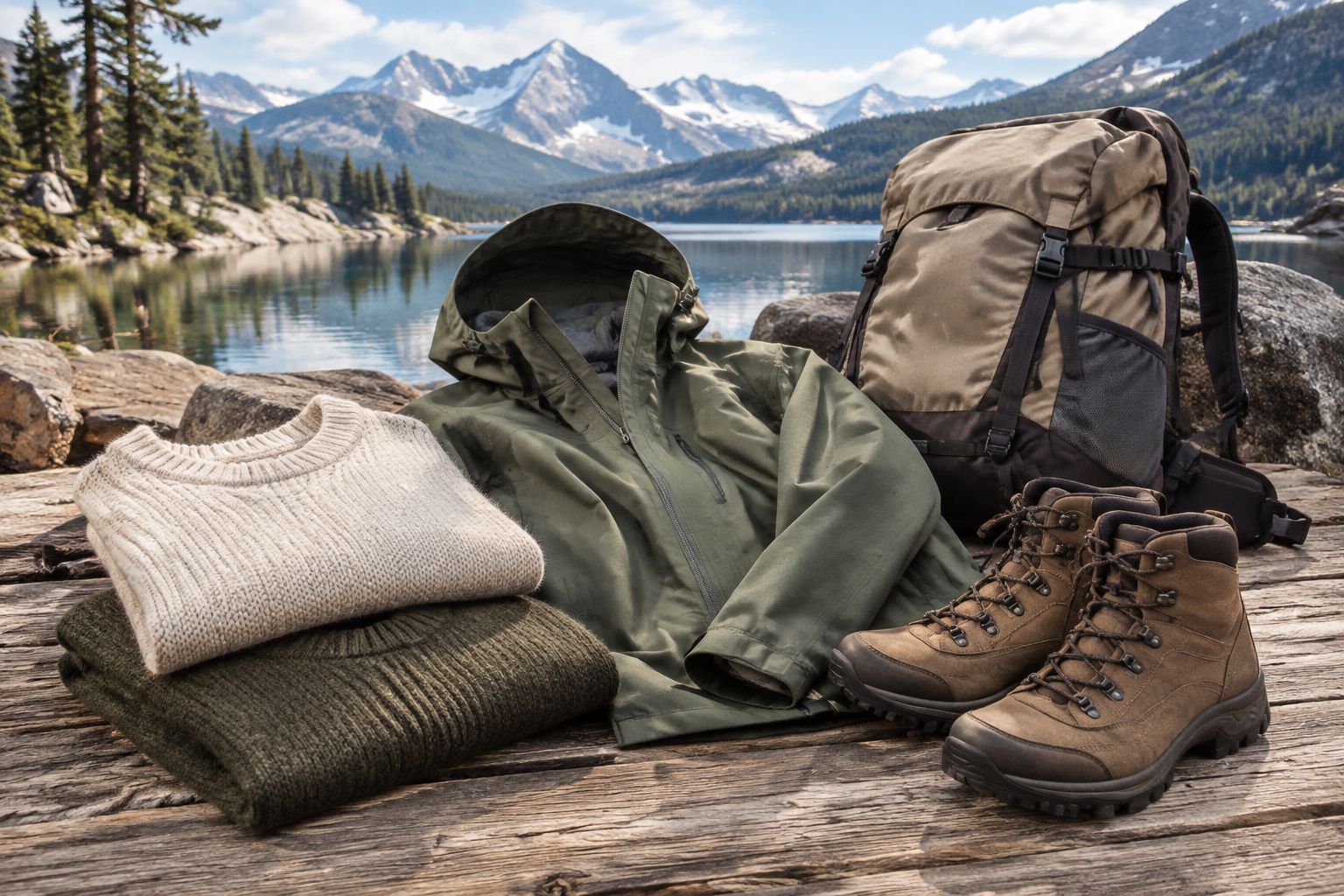
The layering principle
Canadian weather can change quickly, particularly in the mountains and on the coast. The most useful packing approach is layering: a base layer that wicks moisture, an insulating mid layer such as fleece or wool, and a waterproof, breathable outer shell. Choose synthetic or merino fabrics over cotton, which holds water and feels cold when damp.
Pack for the coldest and wettest scenario in your itinerary, not the average day. Even in summer, nights in the mountains and northern regions can drop below freezing.
Core checklist
Clothing: base layers, a warm mid layer, a waterproof shell, hat, gloves, two pairs of socks per day, and comfortable footwear with grip. Sun protection includes sunglasses, a hat with a brim and sunscreen.
Gear and safety: a first-aid kit, a headlamp, a small emergency blanket, a whistle, a paper map as a backup to your phone, and bear spray if you plan to hike in grizzly country. Carry a reusable water bottle and a basic repair kit for the car.
Seasonal additions
Spring: rain gear and waterproof footwear for muddy trails, plus insect repellent for early summer. Summer: lightweight layers, a swimsuit and reef-safe sunscreen for lakes. Autumn: a warm hat and gloves for early mornings, and layers for changeable days. Winter: insulated boots, traction devices, a winter emergency kit for the vehicle and a shovel.
Before you leave, check the current conditions and road advisories for your route, and tell someone your plans if you will be out of phone coverage. Packing light is useful, but not at the expense of warmth and waterproofing.
Plan the rest of your trip
Download the printable Road Trip Planner or the four-season packing checklist to keep your itinerary, safety kit and bookings in one place.