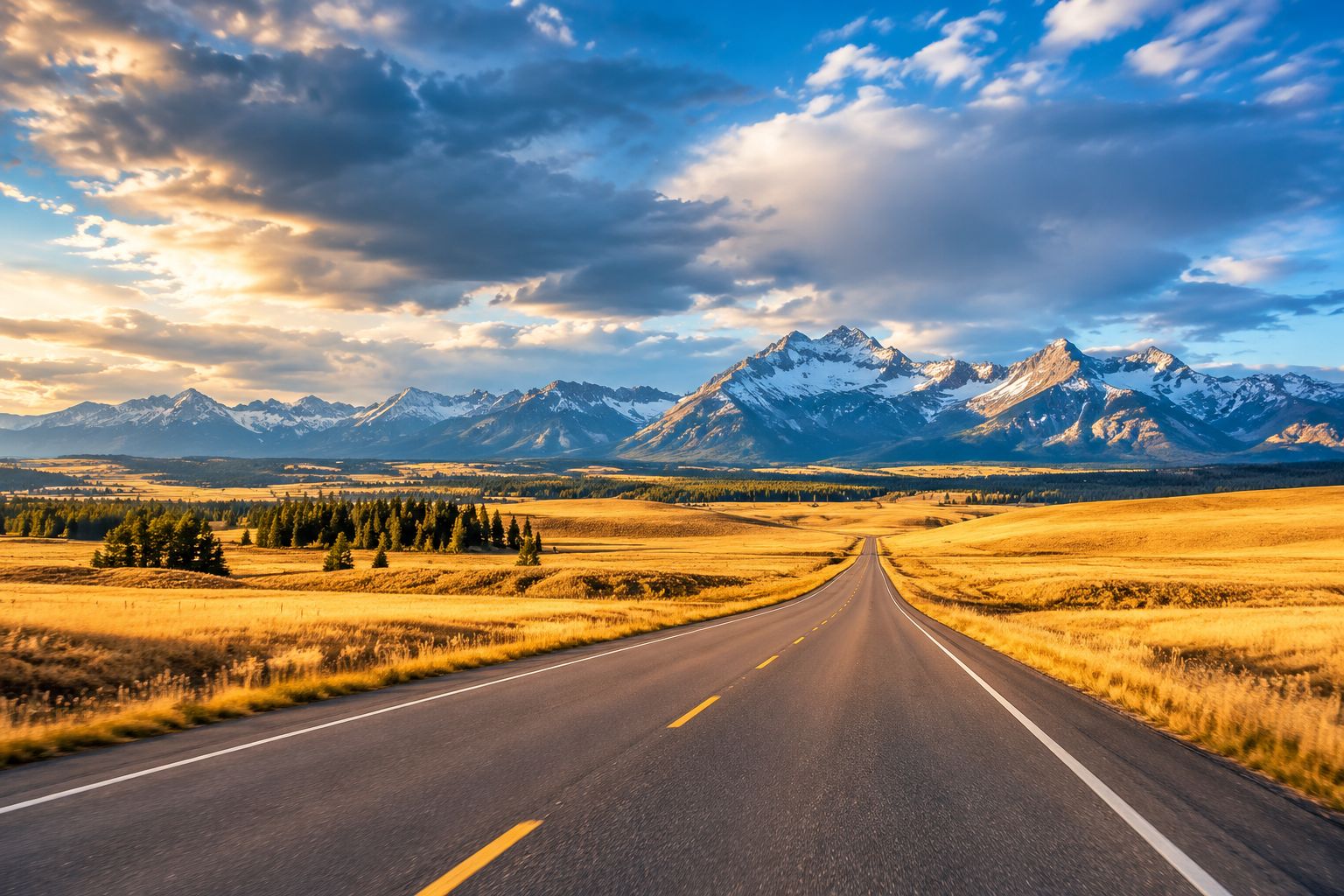
The drive at a glance
The Trans-Canada Highway, Highway 1, connects Calgary with Banff in about ninety minutes without traffic. The first part of the journey crosses foothills and open ranch country, and the mountains appear gradually, so the view changes from prairie to peak over roughly an hour. Traffic builds on Friday afternoons and Sunday evenings, so consider leaving early.
Calgary is a practical starting point with airport access and car rental. Give yourself time to stop in Canmore, which has a relaxed main street and trailheads close to town.
Viewpoints and scenic stops
Morley and the Stoney Nakoda area offer views of the Rockies rising from the foothills. Castle Mountain, near the Castle Junction, is a striking limestone peak visible from the highway. Lake Minnewanka, a few kilometres from Banff town, has a long lake shoreline and quiet day-use areas.
For a detour, take Highway 40 into Kananaskis Country, where the Spray Lakes and Kananaskis Lakes offer alpine scenery with fewer crowds than the Banff core. Check road closures in winter, because some Kananaskis roads are seasonal.
Historic stops and practical notes
Fort Calgary, at the confluence of the Bow and Elbow rivers, tells the story of the North-West Mounted Police and the city's founding. The Cochrane Ranche Historic Site, a short drive west of Calgary, preserves a nineteenth-century ranching property and is a relaxed stop for families.
Carry a full tank, check weather and highway conditions before departure, and keep an eye out for wildlife at the roadside. Highway 1 is a major commercial route, so pull off only at designated lookouts.
Plan the rest of your trip
Download the printable Road Trip Planner or the four-season packing checklist to keep your itinerary, safety kit and bookings in one place.