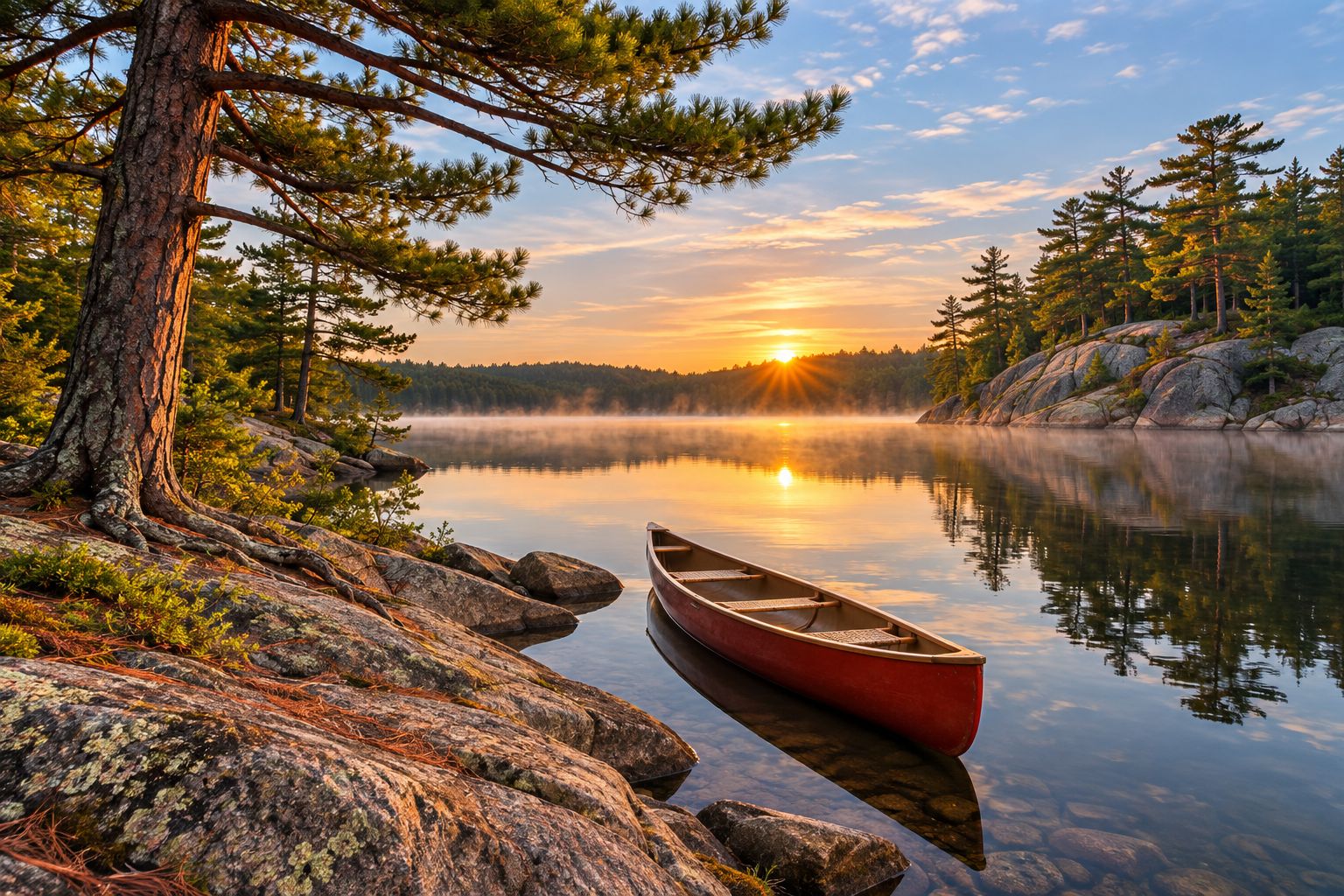
How provincial camping differs from national parks
Ontario operates one of the largest provincial park systems in North America. Provincial parks are managed by Ontario Parks and generally offer more campsites, boat launches and day-use areas than national parks. Reservations are usually made online, and popular campgrounds fill quickly on long weekends in July and August.
The eight parks below were chosen for a mix of backcountry character, accessible campgrounds and reliable quiet. Rules, fees and facilities change, so confirm the current details on the Ontario Parks website before you book.
The eight parks
Algonquin is the largest and most famous, with a canoe network and a dense maple and birch forest. Killarney, on the La Cloche Mountains, offers white quartzite ridges and clear lakes. Quetico, in the northwest, is a remote canoe destination with few roads and strict limits on motors.
Bon Echo has the Mazinaw Rock pictographs and a dramatic cliff face over the lake. Rondeau, on Lake Erie, protects Carolinian forest that is rare elsewhere in Canada. Awenda, on Georgian Bay, has a sandy beach and well-marked trails. Pinery, on Lake Huron, has dunes and a long, quiet shoreline. Sandbanks, near Prince Edward County, has some of the largest freshwater sand dunes in the world.
Practical tips for quiet camping
Arrive midweek when possible. Bring insect repellent for early summer and check the forecast, since afternoon thunderstorms are common in July. Store food in a sealed container or in a vehicle to reduce wildlife encounters, and never leave snacks on a picnic table overnight.
Leave the campsite cleaner than you found it, stay on marked trails to protect fragile vegetation, and carry out everything you bring in. Ontario's park staff are a useful source of current conditions, particularly for portage routes and water levels.
Plan the rest of your trip
Download the printable Road Trip Planner or the four-season packing checklist to keep your itinerary, safety kit and bookings in one place.